Results at a glance:
- Rural sentiment has sharply improved in SA, with farmers buoyed by beneficial rain, strong crop performance and positive market signals.
- SA farmers have the highest confidence levels nationally.
- Input cost pressures have eased somewhat, with farmers making strategic on-farm investments to help future-proof their businesses from supply and cost shocks.
South Australian farmers are moving into spring energised by widespread winter rain and are enthusiastic about yield forecasts and positive signals from livestock markets.
The latest Rabobank Rural Confidence Survey, released today, tracked rural sentiment in SA at the highest level in the nation, rising from -39 per cent last quarter to now sit at eight per cent.
Nationally, confidence was up across all states and commodities. This is a marked difference to three months ago, when the Q2 survey reflected a nation-wide decline in rural sentiment, pushed down by worries about costs and the availability of essential farm inputs in the wake of tensions in the Middle East.
Despite ongoing global volatility, 26 per cent of SA farmers are now optimistic conditions will improve over the next 12 months (up from 17 per cent with that view last quarter). Pessimism also eased in the sector, with only 18 per cent expecting conditions to worsen in the year ahead (down from 56 per cent), while just over half of SA farmers now expect current conditions to continue (was 23 per cent).
Positive sentiment in SA this quarter was grounded on market forecasts. Just over half of respondents (53 per cent) cited rising commodity prices as a reason for favourable conditions prevailing in the year ahead, while a third hold expectations for a good season (33 per cent).
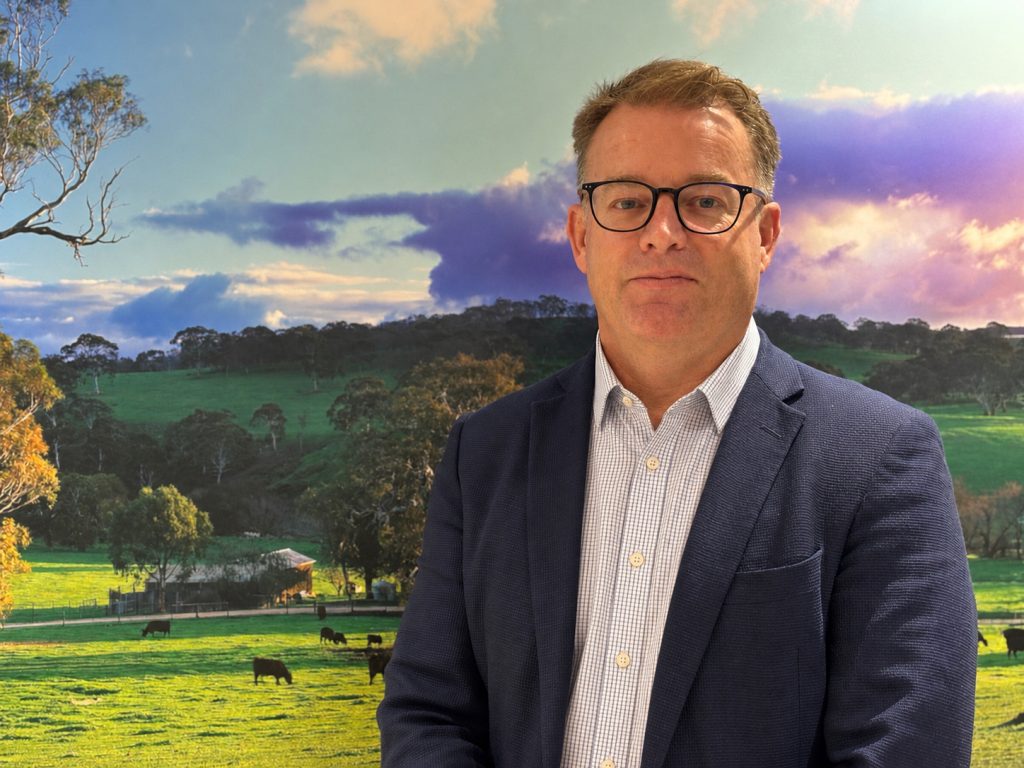
Rabobank state manager for South Australia Peter Evans said producers entered 2026 bracing for dry El Niño conditions in the second half of the year, but widespread and timely rain through autumn and winter has transformed their outlook.
“Since starting in this role four months ago, I’ve travelled across much of the state and it has been pleasing to see how confidence has lifted with beneficial seasonal conditions,” he said.
Mr Evans said a noticeable shift in mood had been observed across rural communities.
“Conversations are more upbeat and energised – this has been really clear at industry events across the state, including the recent Eyre Peninsula Field Days, where the optimism of local farmers was really evident,” he said.
“This renewed enthusiasm is fostering greater strategic thinking, with producers looking beyond immediate operational pressures and considering longer-term opportunities.”
On the opposing side of the balance sheet, worry about some key factors – including drought and falling commodity prices – dipped this survey, which was completed last month. But there was a small lift in concern about government interventions/policies among South Australian farmers following the Federal Budget.
While still high, concerns about input price and accessibility softened this quarter compared to the last survey, cited by 62 per cent of SA farmers surveyed – down from 68 per cent last quarter when SA producers were facing initial war-related price shocks.
Adjacent to the cost of key farm inputs, 30 per cent of SA farmers remain worried about energy security (elevated fuel costs and supply availability), while concerns about the fallout of war nudged up a couple of percentage points to 15 per cent.
The Q3 data showed sentiment improved across all regions in SA this survey. The Eyre Peninsula had the highest confidence, rebounding from a net index of -60 per cent last quarter to 25 per cent this survey.
SA grain farmer confidence surged this quarter, with sentiment in this sector lifting from a low of net -71 per cent last survey to now sit at 10 per cent.
“Crop conditions are strong and yield potential remains high across the state despite isolated frost events. Even the more marginal areas have benefited from timely rainfall,” Mr Evans said.
“The focus is now on maximising yield potential through agronomic strategies, such as applying fungicide to mitigate disease risk in the wet conditions, and forward-planning harvest logistics and marketing.”
He said the beneficial season is prompting farmers to bring forward planning discussions, particularly around next year’s agronomy strategies and inputs.
“Recent events have created a scenario where SA farmers – who have navigated input cost/availability concerns earlier this year and are now anticipating strong crop yields – are taking a forward-thinking approach to next season’s requirements,” he said.
“In periods of stress, it’s difficult to take a longer-term view, so this intentional outlook reinforces that our farming industry is in a positive position and confident to put clear plans in place for next year.”
Mr Evans said while canola markets have delivered modest gains, volatility remains in wheat and barley markets, and global unrest continues to impact farm inputs.
“Nothing has really changed in terms of sensitivities in the geopolitical space, but overall confidence has improved significantly – and that’s really down to the season in SA.”
South Australian livestock producers are similarly upbeat, supported by expectations of strong spring pasture growth and solid market signals. This was evident in investment intentions this quarter, with 36 per cent of SA producers planning on increasing livestock numbers over the next 12 months, up from 31 per cent last quarter.
Sheep producers had the highest confidence in the state with a net index of 11 per cent (up from -6 per cent).
Supply-and-demand dynamics continue to drive high lamb prices. The wool market, although prices eased through July, remains strong compared with the same time last year.
“Low supply fundamentals in the sheep industry are holding prices strong in the near to medium term,” Mr Evans said.
SA beef producers reported a net ‘neutral’ confidence reading, with the same number expecting conditions to improve as deteriorate in the coming year. This was back on last quarter, where the sector recorded a reading of net 15 per cent. This softening in confidence is attributed to some easing in cattle markets – after a bullish run of prices – and concerns around the impact to the market now beef imports have reached quota thresholds in China and South Korea.
“Overall though, it has been very pleasing to see seasonal conditions have aligned with the strength of animal protein markets,” Mr Evans said.
“This has given producers the capacity to realise cash flow gains with the improved terms of trade. Looking ahead, it is hoped the market fundamentals that have underpinned recent gains continue to enable producers to build extra resilience into their cash flows.”
Investment intentions held relatively steady this quarter across the state’s agricultural sector, with 31 per cent of SA farmers planning to increase investment in their farm business for the year ahead (was 29 per cent in the previous survey).
However, the level of spend in key areas increased, reflecting buoyed confidence in the farming sector despite an increase in concern about rising interest rates.
More SA farmers are directing capital into on-farm improvements, with 63 per cent this quarter earmarking funds for fences, yards, silos and other on-farm infrastructure (was 57 per cent in the previous survey). Interest in expanding plant and machinery also rose – to 40 per cent of those surveyed, up from 26 per cent previously – alongside a lift in plans to adopt new technologies (to 39 per cent, from 21 per cent).
Although intention to purchase more farmland held steady quarter-on-quarter at nine per cent of SA farmers, Mr Evans said there was growing interest in strategic land purchases. He anticipated this appetite for acquisition will grow if anticipated harvest yields are achieved.
“Farmers in SA continue to make judicious decisions around land purchases, as they assess the economic impact from cost of production, inflation, yield forecast and commodity outlooks,” he said.
A comprehensive monitor of outlook and sentiment in Australian rural industries, the Rabobank Rural Confidence Survey questions an average of 700 primary producers across a wide range of commodities and geographical areas throughout Australia on a quarterly basis.
The most robust study of its type in Australia, the Rabobank Rural Confidence Survey has been conducted since 2001 by an independent research organisation. The next results are scheduled for release in December 2026.
<ends>
Media contacts:
Denise Shaw Will Banks
Media Relations Media Relations
Rabobank Australia & New Zealand Rabobank Australia
Phone: 02 8115 2744 or 0439 603 525 Phone: 0418 216 103 103
Email: [email protected] Email: [email protected]