- Australian insolvency firm GT Advisory & Consulting has warned that AI adoption and workforce restructuring may be adding financial pressure on already vulnerable small-to-medium enterprises (SMEs), compounding traditional stressors such as weak consumer sentiment, high operating costs, and ATO debt recovery activity.
- Workforce restructuring driven by AI can create immediate cash-flow burdens through redundancy payments, accrued leave, and payroll obligations, which can be significant for businesses already short on working capital.
- Poorly planned AI transitions carry additional risks including misjudged technology spend, premature headcount reductions, and delayed revenue realisation if AI systems fail to deliver expected efficiencies before service capacity is diminished.
- Some sectors, including design, marketing, and professional services, face direct business model disruption as clients turn to lower-cost AI alternatives for work previously outsourced to those businesses.
- GT Advisory's Principal Glenn O'Kearney stressed that AI is not itself causing insolvencies, but can accelerate existing problems, urging directors facing financial pressure to seek advice early and explore options such as informal restructuring, Small Business Restructuring, or voluntary administration before working capital is exhausted.
MEDIA RELEASE
FOR IMMEDIATE DISTRIBUTION
Friday, 2nd October 2026
HEADLINE: Is AI adding another layer to business distress? GT Advisory points to an emerging risk for already stretched businesses
Gold Coast, Queensland - With corporate insolvencies remaining at elevated levels across Australia, Gold Coast specialist insolvency firm GT Advisory & Consulting says Artificial Intelligence (AI) adoption and workforce restructuring may be adding another layer of financial pressure for some already vulnerable businesses.
Traditional pressures such as weak consumer sentiment, high operating costs, tight margins and ATO debt recovery activity remain significant drivers of business distress.
Against that backdrop, the rapid adoption of generative AI is creating a new set of operational and restructuring risks for some Australian small-to-medium enterprises (SMEs).
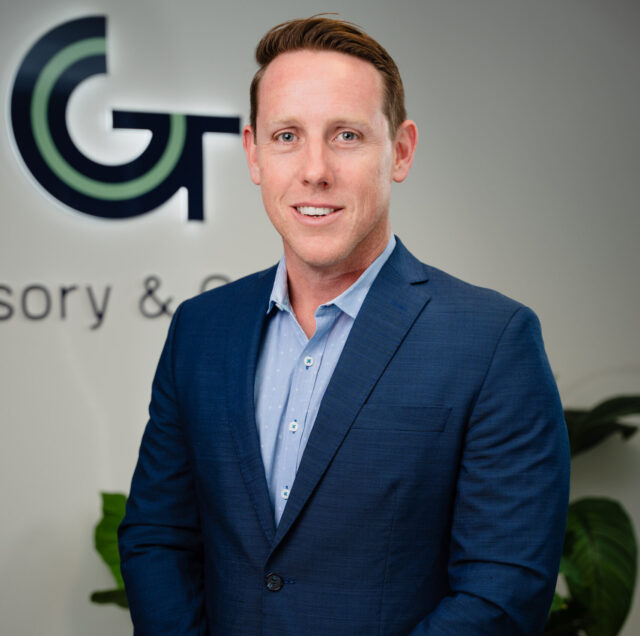
Glenn O'Kearney, registered liquidator and Principal at GT Advisory & Consulting, said the issue is not AI itself, but how quickly businesses under pressure change their cost base and operating model.
"When margins get squeezed, businesses naturally start looking at their cost base, and AI is increasingly part of that conversation," said Mr O'Kearney.
"The mistake is assuming technology is simply a cheaper replacement for people; redundancies cost cash, systems take time and money to implement, and if you cut too quickly you can lose knowledge or service capacity before the technology is actually delivering the savings. At the same time, AI is changing the way a growing number of administrative, analytical and professional tasks are performed, prompting many businesses to reconsider their staffing models.”
AI may deliver long-term productivity gains, but the transition can create short-term cash-flow and operational pressure if it is poorly planned.
These can include some of the following issues for businesses:
-
Workforce restructuring costs: Reducing headcount can create immediate cash costs through redundancy and other termination entitlements, where applicable, accrued leave and related payroll obligations. For a business already short on working capital, those costs can be significant.
-
Business model disruption: Some sectors are feeling the impact more directly than others. Parts of the design, marketing and professional services markets, for example, are seeing customers use lower-cost AI alternatives for work that was previously outsourced.
-
Misjudged software and tech spend: Software, licensing, integration and implementation costs can outpace short-term efficiency gains. Businesses may also reduce headcount too early and then incur additional costs or service issues when the technology does not perform as expected.
-
Delayed revenue realisation: Businesses that downsize customer-facing or operational teams too early can suffer reduced service capacity and lost client retention before AI systems are fully integrated.
"AI isn't, by itself, causing businesses to become insolvent. What it can do is accelerate problems that are already there," Mr O'Kearney said.
"If a business is already short on working capital, a drop in customer demand, the cost of restructuring its workforce or a technology implementation that does not deliver the expected savings can be enough to turn a difficult trading position into a formal insolvency situation.”
“For businesses under financial pressure, the key is to understand the available options before working capital is exhausted. Depending on the circumstances, that might involve an informal restructure, Small Business Restructuring where the eligibility requirements are met, voluntary administration or, where the business is no longer viable, liquidation.”
"The earlier directors deal with financial pressure, the more options they generally have. Once the cash is gone, the ability to restructure the business or preserve value becomes much more limited," added Mr O'Kearney.
About us:
About GT Advisory:
GT Advisory & Consulting was founded on the Gold Coast by Principal Glenn O’Kearney in 2016. Before establishing the firm, Glenn spent more than a decade with two of Australia’s leading corporate restructuring and advisory practices. He founded GT Advisory & Consulting after identifying an opportunity for a specialist insolvency and restructuring practice offering the technical capability of a larger firm with a more personal, accessible and locally focused approach.
Today, GT Advisory & Consulting is one of the Gold Coast’s leading specialist insolvency and restructuring practices. Our professional team brings together decades of specialist insolvency and restructuring experience, including experience gained at leading national restructuring firms. We are committed to maintaining the highest standards of professionalism, independence and integrity in every engagement.
While our experience has been built through many years working within leading national restructuring firms, GT Advisory & Consulting remains deliberately boutique. This allows our senior practitioners to remain closely involved in matters, provide clients and their advisers with direct access to experienced decision-makers, and respond quickly to the commercial realities of each situation.
That combination of specialist expertise, senior-level involvement and a practical, personal approach is what distinguishes GT Advisory & Consulting from larger insolvency practices on the Gold Coast.
For more information or to arrange an initial confidential consultation, visit gtadvisory.com.au
Contact details:
For all media enquiries, images, or interviews, please contact Glenn O’Kearney e [email protected]u / p + 61 419 123 260.