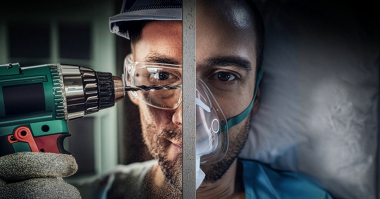
Cancer Council Australia is reminding DIY renovators to remain vigilant this National Asbestos Awareness Week (23–29 November) as data shows home renovations remain a significant source of asbestos exposure amongst people diagnosed with mesothelioma.
A recent Australian Institute of Health and Welfare (AIHW) report revealed that over 9 in 10 Australians diagnosed with mesothelioma were found to have possible or probable exposure to asbestos, with home renovations emerging as a significant source of exposure. The report found:
-
Almost 9 in 10 (89%) people living with mesothelioma had possible or probable exposure to asbestos in a non-occupational setting.
-
More than half (51%) have undertaken major home renovations that involved asbestos products.
-
Almost 4 in 10 (39%) have lived in a house undergoing renovations.
Asbestos can be found in flat and corrugated cement sheeting, cement pipes, insulation, floor tiles, adhesives, textiles or textured paints, meaning it is often hidden in walls, roofs, garages, and sheds, and is more common in homes built before 1990.
In 2025, 627 Australians were diagnosed with mesothelioma. Mesothelioma is a cancer of the mesothelium, a protective membrane lining internal organs and body cavities. The most common type affects the lungs (pleural mesothelioma) and is linked almost exclusively to past exposure to asbestos.
With more time for DIY projects and renovations over the upcoming summer season, Chair of Cancer Council’s Occupational and Environmental Cancer Committee, Melissa Treby is reminding Australians that asbestos is still found in many older homes.
"Many Australians diagnosed with mesothelioma today were exposed while renovating or living in homes being renovated, which is unsurprising given one in three Australian homes still contain asbestos. We’re asking anyone planning renovations, either on their own home or other projects, not to underestimate the risks of exposure. It’s important to identify if asbestos is present and seek expert guidance before any work begins," Treby says.
"Asbestos containing materials such as corrugated sheeting, cement pipes and floor tiles are not dangerous until they are damaged, disturbed or deteriorating because that causes them to release asbestos fibres that are then inhaled. Breathing in asbestos fibres can increase your risk of lung cancer, mesothelioma, asbestosis and other diseases,” Treby states.
“You can't see or smell asbestos. Knowing where asbestos could be and planning for safe, proactive removal ahead of DIY renovations can reduce your risk of exposure. Australians can find professional help by visiting The Asbestos and Silica Safety and Eradication Agency.”
Mesothelioma diagnoses have continued to increase among both men and women in Australia over the past 40 years, as the disease often develops many years after exposure to harmful airborne asbestos fibres.
“Since the national ban on asbestos came into effect in 2003, there is more understanding of the dangers of asbestos and better workplace safety controls. However, people still may not know where asbestos can be found, particularly around the home, and how they can protect themselves,” Treby continues.
Cancer Council Australia backs the Australian Federal Government's recent call for a global asbestos ban, urging stronger international action against asbestos and other harmful chemicals.
“We want all Australians to enjoy their health and their homes for many years to come, and that starts with reaching out to a licensed professional to help identify and remove asbestos safely,” Treby concludes.
About us:
About Cancer Council Australia
Cancer Council Australia is Australia’s leading cancer charity, working with the eight state and territory Cancer Councils to reduce cancer’s impact by:
-
Undertake and fund cancer research
-
Prevent and control cancer
-
Provide information and support for people affected by cancer
-
Shape and influence policy and practice
Contact details:
Contact details
For all media enquiries and interview opportunities, please contact:
E: [email protected]
M: +61 460 316 387
P: 02 8256 4109 media line (redirects to mobile outside of business hours)