

News Hub
The latest breaking stories
Access up-to-date news and information on a wide range of press releases including business, finance, technology, healthcare, entertainment, and more.
Discover the most important & comprehensive stories delivered directly to you daily.
- Federal Budget, Government Federal
- 17/04/2026
- 09:53
Australians for Mental Health welcomes $517 million disability support program
Australians for Mental Health (AFMH) has welcomed the Federal Government’s new Disability Peer Support and Connections Program, calling the $517 million investment a meaningful step toward building the community-based mental health infrastructure Australia urgently needs. The program, now open for applications, will fund organisations to deliver peer support, capacity building and community connection for Australians with disability under the age of 65, regardless of their eligibility for the National Disability Insurance Scheme (NDIS). AFMH said the initiative reflects growing recognition that clinical services alone cannot meet the scale of Australia’s mental health challenge. “For too long, Australians living with disability,…
- Political
- 17/04/2026
- 09:28
International Justice Mission welcomes the Australian Government’s response to the Online Safety Act review report
17 April 2026 The Australian Government has now responded to the independent statutory review of the Online Safety Act 2021 (Cth) (the Act) by Delia Rickard PSM, and International Justice Mission (IJM), the largest international anti-slavery organisation, welcomes this significant step forward. The Government has reinforced its commitment to legislating a Digital Duty of Care for the online industry that will be underpinned by due diligence, safety by design principles, risk assessment and mitigation, robust enforcement, and measurement. Executive Director of IJM’s Center to End Online Sexual Exploitation of Children John Tanagho said,“IJM welcomes the Australian Government’s intent for the…
- Art, Research Development
- 17/04/2026
- 09:19
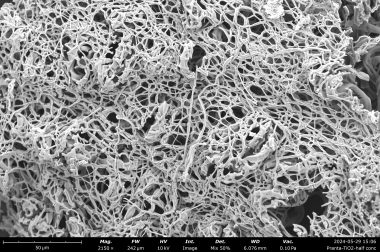
Photography exhibition puts research under the lens
From the highest peak in western Europe to fibers smaller than the eye can see, Charles Darwin University’s (CDU) biennial photography competition and exhibition…
- Contains:
- Agriculture Farming Rural, Community
- 17/04/2026
- 09:16
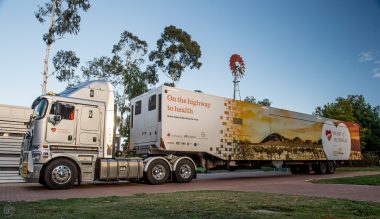
Rabobank brings Heart of Australia to Charters Towers
Rabobank’s Rabo Community Fund has partnered with Heart of Australia on the mobile medical program’s mission to deliver specialist healthcare services to rural and…
- Contains:

- Community, Culturally and linguistically diverse
- 17/04/2026
- 09:00
Dance, Discuss, Diversity at Safal Festival: South Asia and Australia
Key Facts: Celebrate South Asian cultures in Australia SAFAL FEST [email protected] Dance, Discuss, Diversity at Safal Festival: South Asia and Australia Sunday 3rd May…
- Contains:

- Food Beverages, National News Current Affairs
- 17/04/2026
- 08:54
Y SERIES AND THE NFL KICK OFF A FIRST-OF-ITS-KIND PARTNERSHIP IN AUSTRALIA
Key Facts: Y Series becomes NFL’s first-ever wine partner in Australia and New Zealand, signing a multi-year sponsorship deal Partnership includes Official Wine Partner…
- Contains:
- Transport Automotive
- 17/04/2026
- 08:34
Fuel Quality Fears Grow as Crisis Deepens for NSW Freight Industry
Peak industry bodies are warning that poor-quality fuel entering Australia has the potential to damage trucks, increase operating costs and further disrupt critical supply chains. Road Freight NSW (RFNSW), alongside the Refrigerated Warehouse and Transport Association of Australia (RWTA), Bus Industry Confederation (BIC), Waste Contractors and Recyclers Association of NSW (WCRA), International Freight Forwarders and Customs Brokers Association of Australia (IFCBAA) and Fuel and Infrastructure Management Australasia (FIMA), say the shift to alternative and emergency fuel sources is introducing new risks for operators across NSW. RFNSW Chief Executive Officer Simon O’Hara, said as the fuel crisis escalates, the issue is…
- CharitiesAidWelfare, Community
- 17/04/2026
- 08:34
Re-Opening of The Salvation Army’s The Family Place in Logan
16 April 2026 MEDIA ALERT Re-Opening of The Family Place, Logan The Family Place is a unique Salvation Army mission expression, sitting within the suite of Doorways programs, designed as a welcoming, safe and engaging place for families and their children. It serves not only as a drop-in, play-based centre for families, but also as a soft entry point for parents, grandparents and other caregivers to access inclusive and person-centred services for themselves and their children, particularly when it comes to parenting support and child development. The centre underwent a significant redevelopment in 2025, commissioned and funded by landlord’s Vincent…
- Contains:
- Medical Health Aged Care
- 17/04/2026
- 08:05
New specialist GPs to be welcomed at Fellowship ceremony in Cairns
The Royal Australian College of GPs (RACGP) is celebrating new Fellows at a ceremony in Cairns this week, marking their entry into the profession as specialist GPs. The RACGP Queensland Faculty will host its annual regional Fellowship ceremony on Friday 17 April, welcoming 27 new Fellows to the profession. Fellowship of the RACGP (FRACGP) reflects a doctor’s qualification and expertise as a specialist GP, following around 11 years of education, training, rigorous assessment, and experience in primary care. This event marks an ongoing commitment by the RACGP Queensland Faculty to hold a Fellowship ceremony in a regional area annually. The ceremony was last held in Cairns in 2021. RACGP President Dr Michael Wright congratulated the…
Media Outreach made fast, easy, simple.
Feature your press release on Medianet's News Hub every time you distribute with Medianet. Pay per release or save with a subscription.