The $120,000 inheritance debt: What another coal mine leaves every NSW child
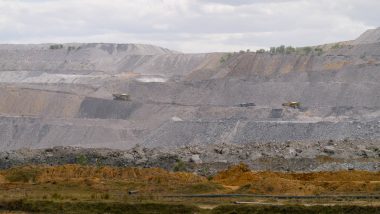
With a decision on HVO expected by 4th September, new analysis puts a price on what approving another coal extension leaves the next generation to carry: the equivalent of almost $120,000 for every NSW child.
24 August 2026, NSW - Every child in NSW would be left with the equivalent of an almost $120,000 inheritance debt from the global climate damage associated with the proposed Hunter Valley Operations (HVO) coal mine extension, new analysis from Parents for Climate has found.
With a decision on HVO expected within weeks, the analysis puts a new figure on what today's coal decisions leave the next generation to carry, estimating the mine's projected emissions would cause around $212 billion in global climate damage.
For the approximately 1.8 million children living in NSW today, that is equivalent to almost $120,000 per child. It’s a cost they have no say in creating, but will live with the consequences of for decades to come.
“The cost of this coal mine on the children of NSW, and across Australia is unacceptably and excruciatingly high. The pollution will come back to every family as fires, floods, heatwaves, rising bills and disrupted livelihoods. It doesn’t matter whether it’s burnt in Singleton or Shanghai, coal doesn’t care about borders. And this is a mine in our own backyard. Wherever it’s burnt, it will impact our kids’ climate”, said Parents for Climate CEO and father of two Nic Seton.
The economic case for coal also starts to unravel when its full costs are put alongside its benefits.
NSW received around $2.95 billion in coal royalties last year, while Australian Government modelling projects the annual economic cost of natural hazards in NSW could reach $51.4 billion by 2050. That's more than $17 in projected annual hazard costs for every $1 NSW currently receives in coal royalties.
Yet the children who will live longest with the consequences of decisions like HVO have no say in them. They don't get a seat at the planning table or a vote. Adults make the decision today while children inherit the result.
Seton said parents understand better than most what it means to make decisions today on behalf of someone else's future.
"Every parent knows what it means to make decisions for someone who can't yet make them for themselves. We spend our lives trying to leave our children better off than we were.
"But our kids don't get a say on this mine, nor do they get a seat at the table or a vote. They just inherit the result.
"No parent would knowingly hand their child a $120,000 inheritance debt for something they didn't buy and won't benefit from. Governments shouldn't either. We need a fair deal for our kids."
The proposed HVO extension would continue mining until 2045 at HVO North and 2042 at HVO South, generating approximately 809 million tonnes of greenhouse gas emissions over its lifetime. Around 98 per cent would be Scope 3 emissions associated with the transport and combustion of the coal by end users.
A child starting kindergarten in NSW today will be an adult before HVO North is scheduled to stop mining. They will have finished school, entered the workforce and started building a life of their own, while the climate damage associated with coal mined throughout their childhood will continue to impact their future for decades.
Parents for Climate calculated the estimated damage by applying a peer-reviewed measure known as the social cost of carbon to HVO's projected emissions. This measure was developed by a multi-institutional research team led by Resources for the Future, with researchers from UC Berkeley, Princeton University, the US EPA, Harvard and others. It puts an economic value on the damage caused by carbon pollution, including impacts on human health, food production and rising sea levels.
The $212 billion figure represents estimated global climate damage, rather than damage that would fall solely on NSW. But NSW families and children are not insulated from that global harm, and those impacts are already impacting childhoods. From rising food and insurance costs to disrupted education, cancelled sports games and worsening extreme weather, the consequences are already being felt by children and families across the country. For schools, more than 2,000 early childhood education and care services across Australia closed in 2025 due to bushfires, cyclones and floods, costing children under five almost 800,000 days of early learning (ARACY and UNICEF Australia).
The state's own Net Zero Commission shows what climate damage means here at home. It lowers incomes while increasing grocery costs and productivity losses, ultimately resulting in a weaker NSW economy and less money in people’s pockets. For families, those impacts are already reaching the kitchen table.
If the world remains on its current path, the Commission projects the average NSW worker will lose around $3,500 in annual income every year over the next 50 years, as climate change drags on productivity, wages and economic growth. At the same time, a family of four could be paying around $3,000 more for groceries every year by 2070, alongside growing financial pressure from insurance and extreme weather.
"This is what climate damage looks like around the kitchen table. Less money coming into the family budget while the cost of food, insuring and protecting our families goes up," Mr Seton said.
"For our kids, it's also about the childhood they stand to lose. More days when sport is cancelled or playgrounds are too hot to play in. More school and early learning disrupted by heat, fires, floods and other disasters. More families forced to evacuate their homes, and drought and extreme weather putting pressure on the quality, availability and affordability of the food we put on the table.”
"A coal mine can close in 2045, but the pollution won’t disappear. The consequences follow our children for generations after the last truck leaves the mine."
Separate analysis has also raised questions about whether NSW's existing mine assessment framework adequately accounts for those costs.
The Institute for Energy Economics and Financial Analysis (IEEFA) found that when higher carbon costs are applied to HVO, the project's claimed economic benefit to NSW can be almost entirely wiped out.
IEEFA found HVO's economic assessment valued the emissions cost of more than 15 million tonnes of direct project emissions at just $3.8 million. Using NSW Treasury carbon values instead, IEEFA calculated a cost of more than $2.2 billion.
Under another carbon-cost scenario examined by IEEFA, the emissions cost reached $5.64 billion, almost entirely wiping out HVO's assessed $5.71 billion net economic benefit to NSW.
"There is something fundamentally wrong with an economic argument that counts the potential revenue from coal, but leaves out the costs NSW families and their children will be forced to carry", Mr Seton said.
“Leaving billions in costs out of the equation misleads the public about the true cost of coal. It’s an extraordinary example of greenwashing on an industrial scale, and it’s our children who inherit the consequences.”
"Every parent thinks about what they will leave their children. Before approving another coal extension, decision-makers should ask the same question; what kind of future will our kids inherit from the decisions we make today?"
Parents for Climate is calling on the NSW Government to act on the advice of its own Net Zero Commission and recognise that new and expanded coal mines are incompatible with NSW’s climate targets, rather than leaving families and children to pick up the bill.
Fair Deal For Our Kids is a Parents for Climate campaign urging the NSW Government to stop approving new coal, set binding emissions targets for the coal sector, and fund a fair transition for coal communities. So every child inherits clean air, a safe climate and a town with a future. https://www.parentsforclimate.org/a_fair_deal
-ENDS-
Notes to Editors:
Media enquires:
For any media enquires, please contact
[email protected] | 0487 288 144
[email protected] | 0431 279 785
About Parents for Climate:
Parents for Climate represents over 27,000 parents, grandparents and carers from Australia. We are Australia’s leading organisation for people who care about a safe future for kids and advocating for a safe climate. Our supporters come from across the political spectrum, all Australian electorates, and from a wide range of socio-economic backgrounds. We seek non-partisan responses to climate change and its impacts.
We advocate for Australian governments and businesses to take urgent action to cut Australia’s carbon emissions to net zero as quickly as possible. We encourage Australia to demonstrate leadership on the world stage through positive and proactive domestic action and calling for other nations to take the necessary steps to protect our children’s futures. For more information, visit www.parentsforclimate.org
Methodology and Resources:
Parents for Climate analysis: the $120,000 inheritance debt
Parents for Climate has calculated an indicative economic value for the global climate damage associated with the proposed Hunter Valley Operations (HVO) continuation project, and translated that figure into an equivalent amount for every child in NSW today.
1. HVO lifetime emissions
The NSW Department of Planning, Housing and Infrastructure estimates the HVO continuation project would generate approximately 809 million tonnes (Mt) of CO₂-e emissions over its lifetime. Around 98 per cent would be Scope 3 emissions associated with transporting and burning the coal by end users.
NSW Department of Planning - HVO Continuation Project Assessment Report
2. Putting an economic value on the climate damage
Parents for Climate has used the social cost of carbon, an established economic measure designed to put a monetary value on the damage to society caused by an additional tonne of carbon dioxide.
A peer-reviewed 2022 study published in Nature estimates a central social cost of carbon of US$185 per tonne of CO₂, in 2020 US dollars. Its 5th–95th percentile range is US$44-US$413 per tonne, reflecting uncertainty inherent in estimating future climate damages.
The social cost captures economic damages including effects on human health, agricultural productivity and sea-level rise.
Nature - Comprehensive evidence implies a higher social cost of CO₂
3. Calculating the estimated $212 billion global climate damage
Parents for Climate calculation:
809 million tonnes × US$185 per tonne = US$149.665 billion
Using an indicative exchange rate of approximately US$1 = A$1.419 at the time of analysis:
US$149.665 billion × 1.419 = approximately A$212.3 billion
The release therefore uses the rounded figure $212 billion in estimated global climate damage.
This is an indicative estimate based on the central social-cost-of-carbon value. It is not an estimate of $212 billion in damage to NSW alone.
4. Calculating the equivalent per NSW child
There are approximately 1.8 million children and young people in NSW. The NSW Advocate for Children and Young People reports more than 1.8 million people aged 0-18 in the state.
Parents for Climate calculation:
A$212.3 billion ÷ ~1.8 million children = approximately A$118,000 per child
This has been rounded to “almost $120,000 for every NSW child”.
The figure is an illustrative equivalent designed to communicate the scale of the estimated global damage. It does not mean every NSW child will personally incur a $120,000 financial loss.
Bringing the global damage home to NSW:
While the $212 billion calculation represents estimated global climate damage, NSW families are not insulated from those impacts.
Independent modelling commissioned by the NSW Net Zero Commission from Deloitte Access Economics and UNSW's Institute for Climate Risk & Response found climate change is already reducing economic output and is projected to affect both incomes and household living costs.
If the world remains on its current higher-warming trajectory, the modelling projects:
-
the average NSW worker could lose around $3,500 in annual income every year over the next 50 years, driven by climate impacts on productivity and economic growth; and
-
a four-person NSW household could face an annual grocery bill around $3,000 higher by 2070, compared with the baseline.
The Commission says household impacts are driven by lower productivity and higher infrastructure, food and insurance costs.
NSW Net Zero Commission - Economic impacts of climate change in NSW
Coal royalties and projected NSW climate-related hazard costs:
NSW received $2.953 billion in coal royalties in 2024-25, according to NSW Resources. Coal accounted for more than 92 per cent of the state's total mining royalties that year.
Separately, Australian Government modelling cited by the NSW Department of Planning estimates the annual economic cost of natural hazards in NSW could reach $51.4 billion by 2050, excluding coastal hazards, under a moderate emissions scenario.
Parents for Climate has compared the scale of these two annual figures:
$51.4 billion ÷ $2.953 billion = 17.4
This is expressed in the release as:
Projected annual climate-related hazard costs in NSW by 2050 are more than 17 times the state's current annual coal royalty revenue.
This is a scale comparison only. It does not attribute all projected NSW natural-hazard costs to the NSW coal industry or suggest that every $1 of coal royalties directly causes $17 in climate damage.
NSW Resources - coal royalty revenue
HVO economic assessment:
Separate analysis by the Institute for Energy Economics and Financial Analysis (IEEFA) has questioned whether NSW's existing economic assessment guidelines adequately account for the emissions costs associated with coal projects.
IEEFA found that HVO's assessment attributed approximately $3.8 million in emissions costs to more than 15 million tonnes of Scope 1 and 2 emissions under the existing methodology.
IEEFA calculated that applying NSW Treasury carbon values to the full reported Scope 1 and 2 emissions would instead produce an emissions cost of more than $2.2 billion.
IEEFA also identified an alternative carbon-cost scenario referenced in HVO's economic assessment that produced an emissions cost of $5.64 billion, virtually eliminating the project's assessed $5.71 billion net economic benefit to NSW.
IEEFA - NSW's outdated guidelines skew assessment of coal mine approvals
Early childhood disruption:
Research from ARACY and UNICEF Australia found that more than 2,000 early childhood education and care (ECEC) services across Australia closed at some point during 2025 due to bushfires, cyclones and floods. Together, these closures resulted in children under five missing almost 800,000 days of early learning.
Source: ARACY and UNICEF Australia, 800,000 Days of Learning at Stake: Building climate-resilient early childhood education across Australia (2026).
Parents for Climate - 800,000 days of learning lost
ACRAY - 800,000 Days of Early Learning Lost to Climate Hazards
Methodology caveat:
Social-cost-of-carbon estimates vary depending on assumptions including future climate damages and discount rates. Parents for Climate has therefore used the central US$185/tCO₂ estimate from the peer-reviewed Nature study and describes the resulting $212 billion figure as indicative.
The HVO figure is expressed by DPHI as CO₂-equivalent, while the Nature social-cost estimate is specifically expressed per tonne of CO₂. HVO's lifecycle emissions are overwhelmingly Scope 3 emissions associated with transporting and combusting coal. The calculation should therefore be understood as an illustrative application of the central social cost of CO₂ to the project's reported lifecycle CO₂-e emissions, rather than a project-specific economic valuation.
About us:
Parents for Climate represents over 27,000 parents, grandparents and carers from Australia. We are Australia’s leading organisation for people who care about a safe future for kids and advocating for a safe climate. Our supporters come from across the political spectrum, all Australian electorates, and from a wide range of socio-economic backgrounds. We seek non-partisan responses to climate change and its impacts.
We advocate for Australian governments and businesses to take urgent action to cut Australia’s carbon emissions to net zero as quickly as possible. We encourage Australia to demonstrate leadership on the world stage through positive and proactive domestic action and calling for other nations to take the necessary steps to protect our children’s futures. For more information, visit www.parentsforclimate.org
Contact details:
For any media enquires, please contact
[email protected] | 0487 288 144
[email protected] | 0431 279 785