
World Vision Day
1 in 5 children have undetected vision problems
Parents, teachers, educators help children
Heroes Wear Glasses – World Sight Day 10th October
1 in 5 children suffer from undetected vision problems.
'I was eventually was diagnosed as needing glasses. I didn't know I couldn't read the classroom board. I was clumsy and often told that I was not listening,' said Susanne Gervay OAM. She had undetected vision impairment.
Good vision is important for a child’s educational, physical and social development. When not detected, the effects can impact every aspect of a child’s life from reading, schoolwork, sport, family relationships to self-esteem. It can lead to inaccurate labelling of children as slow learners, lacking confidence or even troublemakers when they actually have an undetected vision condition.
Children should have a full eye examination before school. Then throughout primary & secondary school. It is free under Medicare and free pre school testing is available.
There is a boom in short-sightedness, with more children than ever at risk of developing poor vision through a variety of factors including lack of detection and increased screen time and decreased green time. Green time ensures that children play, have park time, read printed books anywhere. Reading from a tablet, mobile or screen, especially with close proximity to the screen for long periods, has a negative impact on the development of vision. Simply reading a picture book rather than on a screen, increases social engagement, bonding between parent and child, imagination, literacy and safeguards vision. A new study from the University of Michigan C.S. Mott Children’s Hospital, found that print books were more beneficial to a child’s development than electronic books. Lead author, Tiffany Munzer, M.D. said, “we found that when parents and children read print books, they talked more frequently and the quality of their interactions were better”.
Chief Clinical Officer of Optometry Australia, Like Arundel said that the results of this study supported any opportunity to remove children – and particularly small children – away from screens and play. “We have long campaigned for parents to consider the balance between ‘screen time’ versus ‘green time’ as part of safeguarding our children’s vision.”
Whether it’s a book or digital device Luke Arundel says the 20/20/20 rule: “It is important to take a 20 second break from screens every 20 minutes and look at an object at least 20 feet away.” Research suggests that spending two hours a day outside in bright light may also have a protective effect against the development of short sightedness.

Engaging through picture books and story is a powerful way to understand vision, the impact of wearing glasses, acceptance by peers, promote play whatever a child’s difference.
Check for:-
Appearance
- Red or watery eyes
- One eye turns in or out
Complaints
- Blurred or double vision
- Headache or dizziness
- Eyes burning or itching
Behaviour
- Covers one eye
- Squints
- Tilts the head
- Holds a book close to read
- Difficulty with or avoiding reading or learning
- Rubs eyes
- Confuses colours
- Sensitivity to light
- Frequent blinking
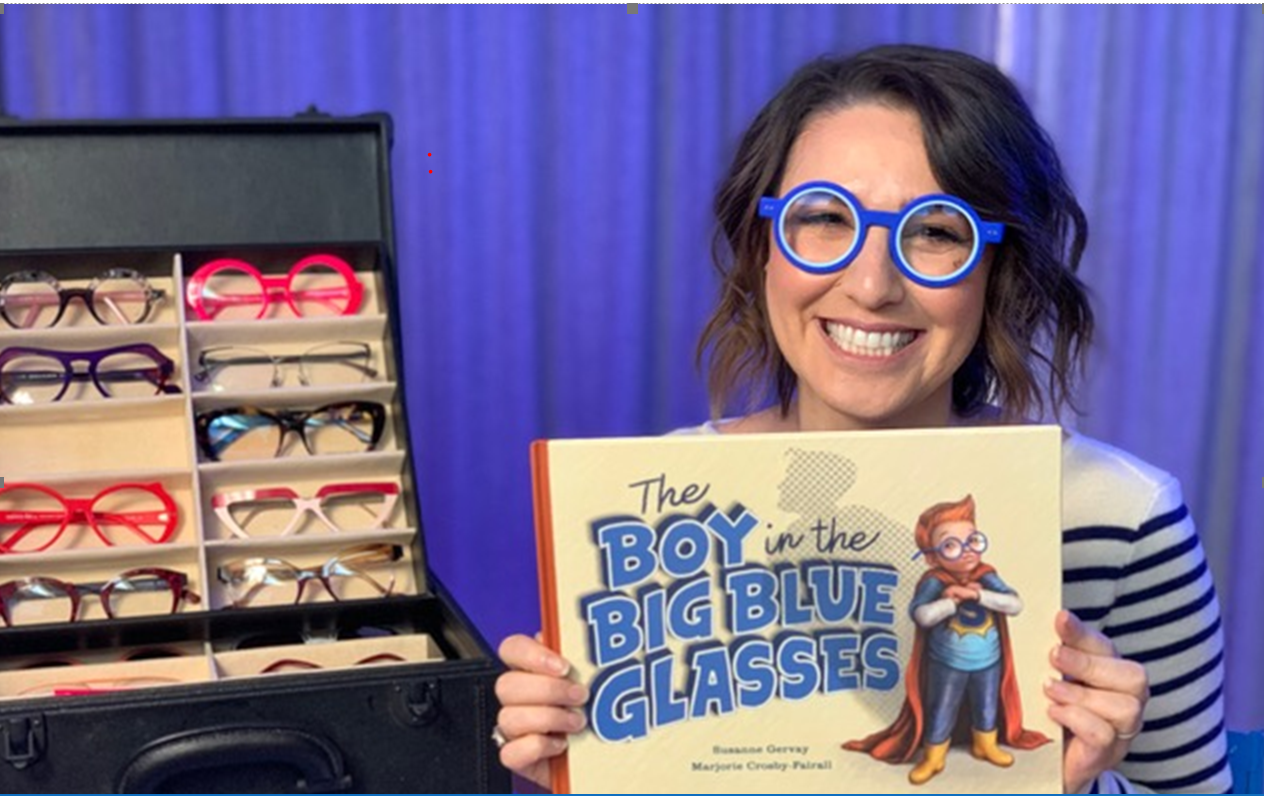
The much loved Story Box Library StoryBox Hub | The Boy in the Big Blue Glasses with the delightful Alice Zaslavsky – reading The Boy in the Big Blue Glasses https://aliceinframes.com/
BIO
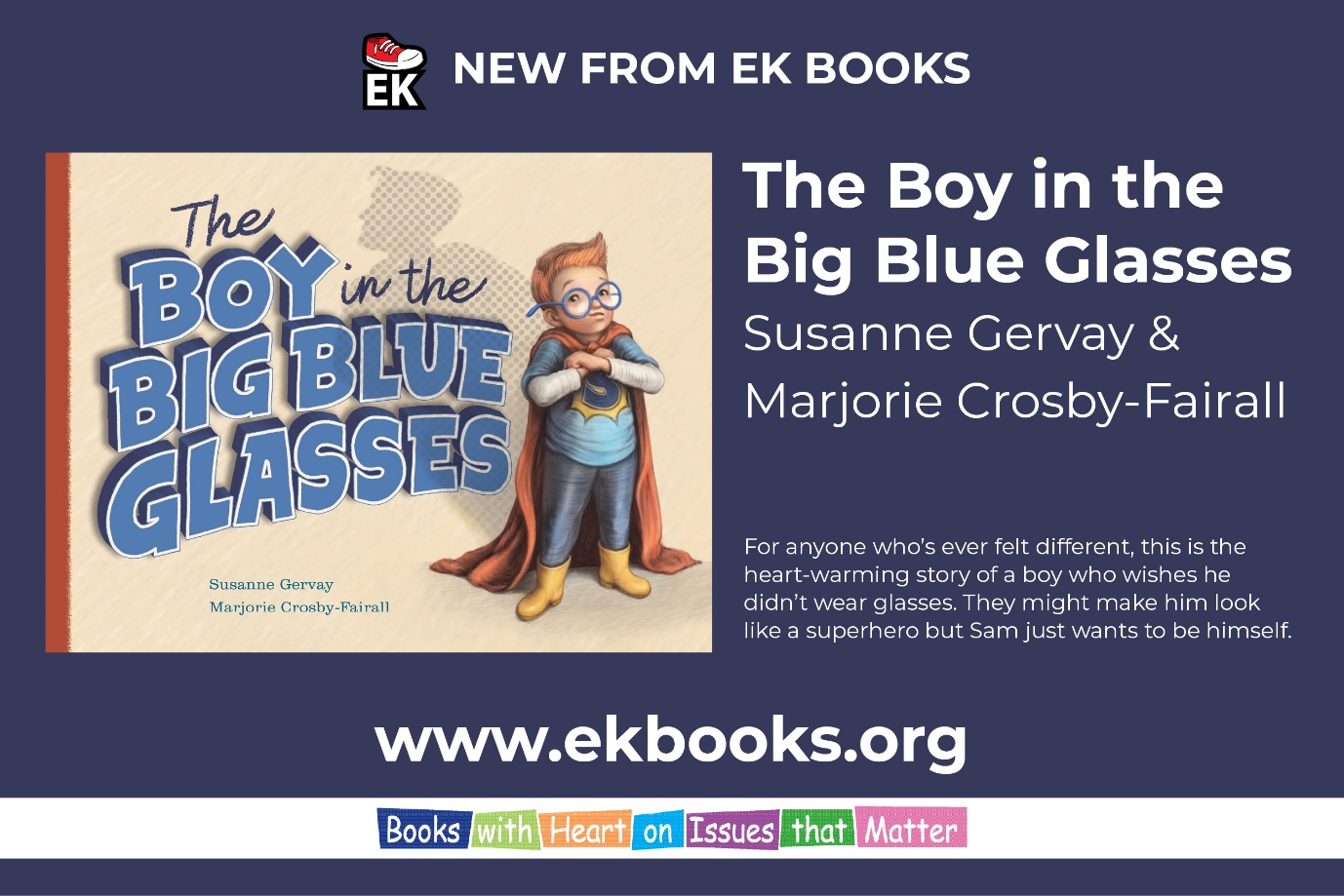
Susanne Gervay: An award winning children’s author, and educational consultant, Susanne Gervay OAM specializes in story engagement to engage in awareness of childhood challenges. Her new picture book The Boy in the Big Blue Glasses is a joyous and positive invitation to address vision, glasses and dealing with difference. Susanne has worn glasses since childhood. https://sgervay.com
Marjorie Crosby-Fairall: An award winning children’s book illustrator, Marjorie Crosby‐Fairall is a freelance illustrator. An Australia/US citizen, her first picture book won the CBCA Eve Pownall Award. Followed by international awards.
For more information:
http://www.optometry.org.au/your-eyes/your-childs-eyes/
https://yourhealthlink.health.nsw.gov.au/event/juleye-2/
Helping children to clearly see that being different isn’t bad - an author on a mission
EK Books - Teacher Notes The Boy in the Big Blue Glasses 16 March 2019
Contacts: Sarah Bloedorn
Feelix Library Coordinator
Vision Australia www.visionaustralia.org
T: +613 9864 9486 (I: 341486) Exisle/EK Books - Victoria [email protected]
E: [email protected] Nathan [email protected]
Immediate Media: Susanne -0413 050 922; [email protected]
Contact details:
Contacts: Sarah Bloedorn Felix Library Coordinator
T: +613 9864 9486 (I: 341486) www.visionaustralia.org
Susanne Gervay: [email protected]; 0413 050 922
EK Books - Victoria [email protected] Nathan [email protected]